The strongest development partners do not disappear; their role evolves. As internal ownership grows, outside support becomes lighter, more strategic, and focused where it adds the most value.
A successful leadership program should leave more behind than good evaluations. The strongest partnerships transfer capability so the organization becomes more confident, scalable, and sustainable from within.
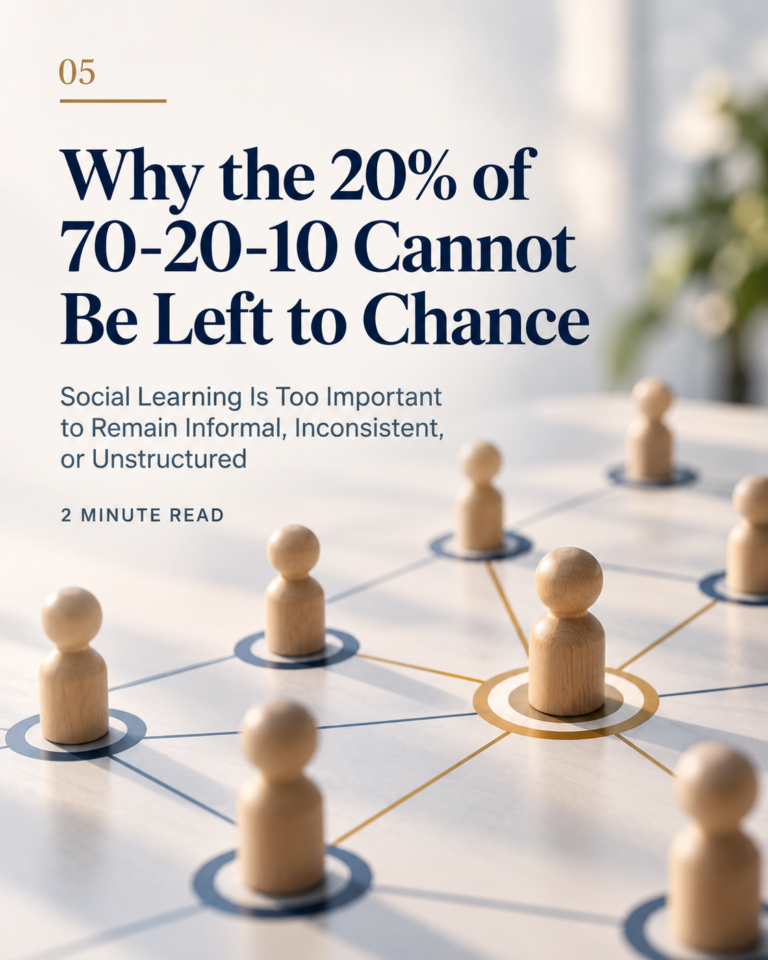
Peer learning does more than develop individuals. When leaders build shared language, expectations, and behaviors together, the 20 percent begins to shape culture across the organization.
Leadership can become more isolating as decisions grow more complex. Trusted peer dialogue helps leaders test assumptions, uncover blind spots, and make more intentional decisions.
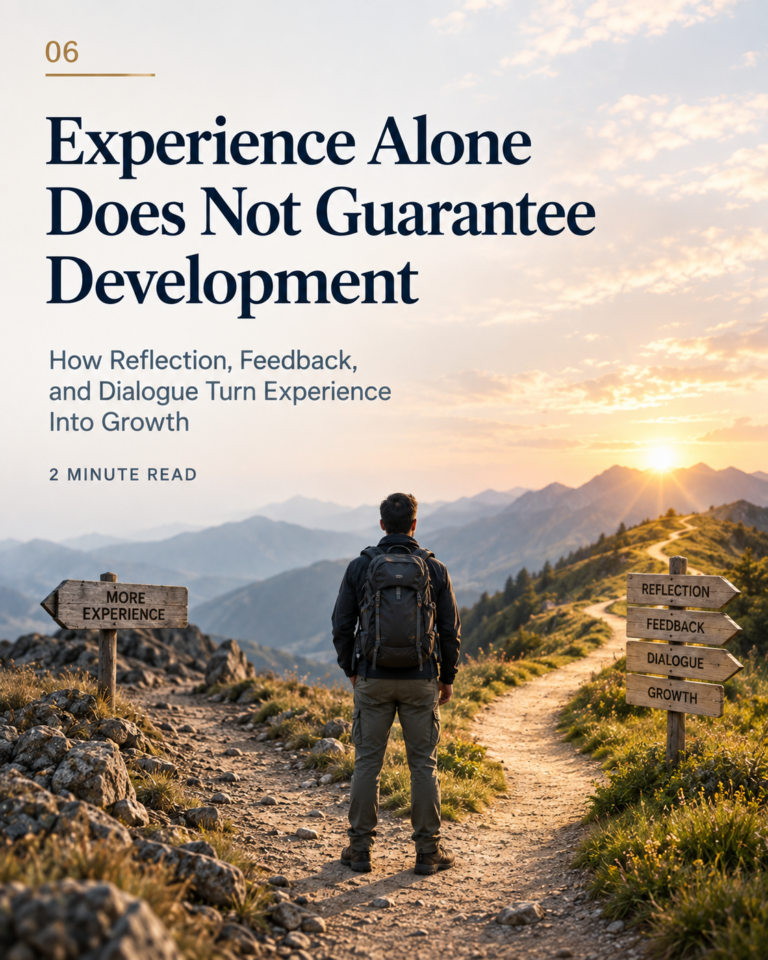
Experience creates opportunity, but not every experience becomes development. Reflection, feedback, and dialogue determine whether leaders repeat old patterns or grow from what happened.
Formal learning is designed, funded, and measured. Social learning is often left to happen on its own. The 20 percent is too important to remain dependent on chance.
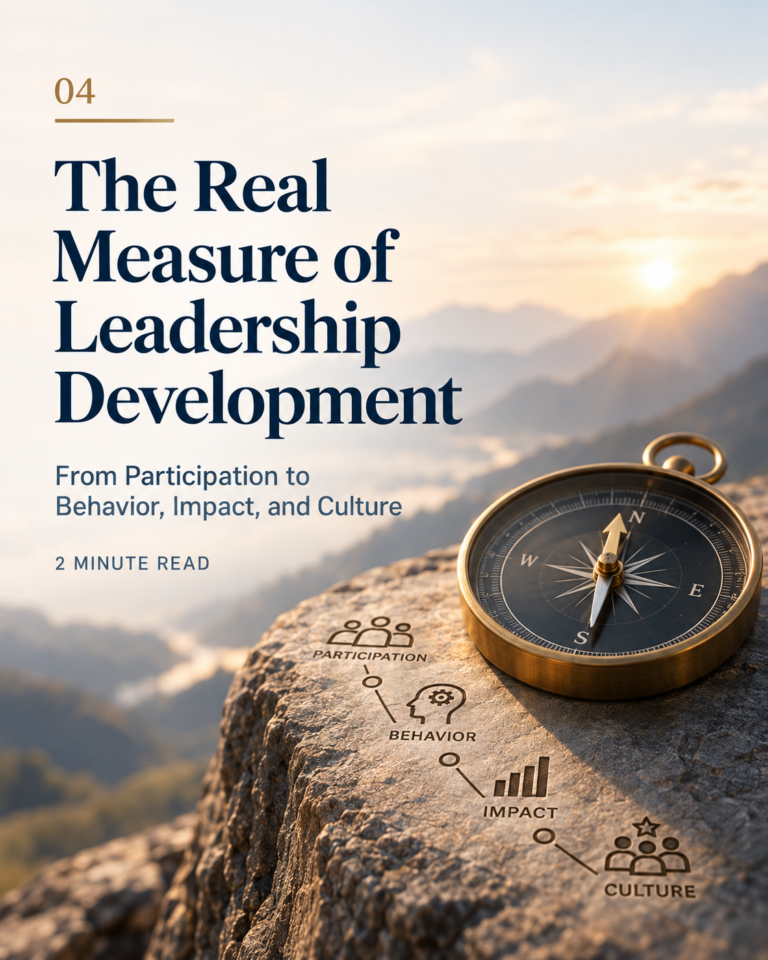
Completion rates and satisfaction scores tell only part of the story. The real measure of leadership development is what changes in behavior, conversations, culture, and performance.
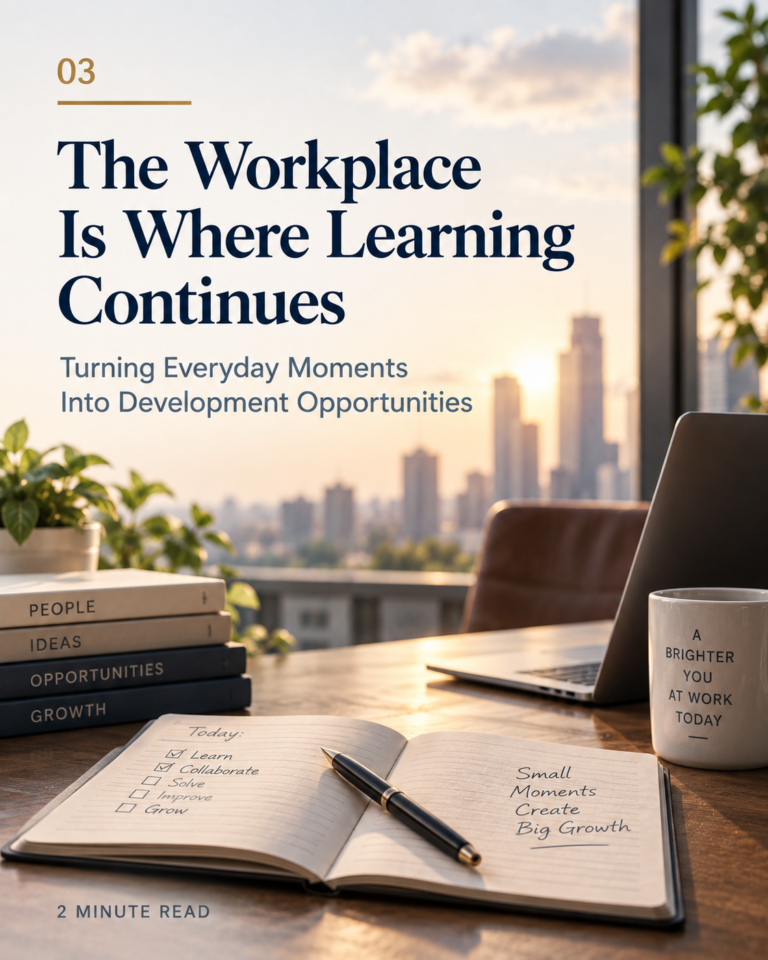
Leadership development does not end when the session ends. The most valuable learning often happens in the everyday moments where leaders apply, reflect, adjust, and try again.
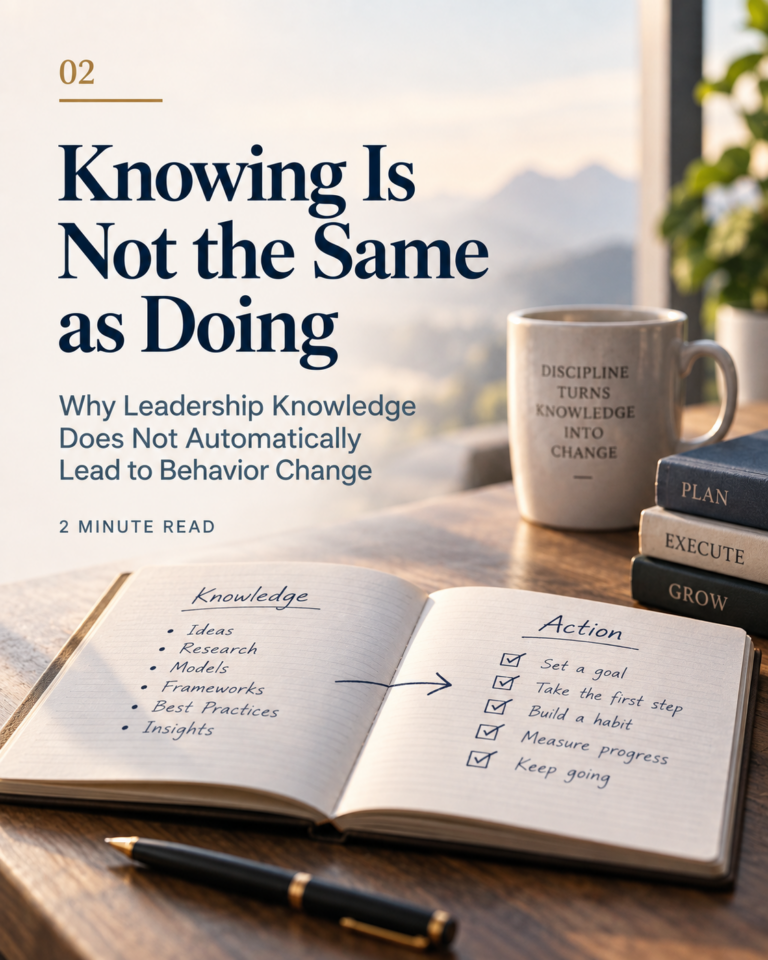
Leaders often know what good leadership requires. The harder question is whether those behaviors hold when pressure rises, conflict appears, and the stakes become real.
Leadership development may not be falling short because leaders need more knowledge. The real gap may be what happens after the learning ends – when pressure, competing priorities, and real conversations test whether knowledge becomes behavior.